
Chapter 3: Introducing Your New Dog to Your Resident Dog
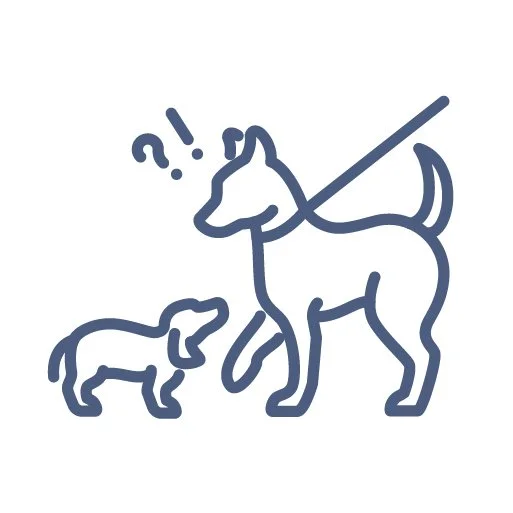
The first time your new dog and your resident dog meet face to face is a moment worth getting right. How it goes can set the tone for their entire relationship — which is exactly why we don't recommend letting it happen in your living room.
Home turf matters to dogs. Your resident dog has claimed that space as their own, and asking them to welcome a stranger into it right away puts them on the defensive before the introduction has even begun. A neutral location — somewhere neither dog has a territorial claim — levels the playing field and gives both dogs the best possible chance at a calm, positive first impression.
Where to meet
Choose somewhere neither dog frequents: a quiet park, an empty parking lot, a calm street in an unfamiliar neighborhood, or even your driveway if your resident dog doesn't spend much time there. The key is that it feels like shared, open space — not anyone's territory.
How to do it
You'll want two people for this — one handler per dog.
Start by walking the dogs parallel to each other, about 10 to 20 feet apart, moving in the same direction. This is called a parallel walk, and it's one of the most effective ways to help dogs get comfortable in each other's presence without the pressure of a direct greeting. Let them sniff the air, notice each other, and simply exist side by side. Keep the leashes loose — tension in the leash travels right down to the dog and can escalate an otherwise calm moment.
After a few minutes of parallel walking, if both dogs seem relaxed and comfortable, you can gradually close the distance. When the moment feels right, allow a brief, controlled greeting — just a few seconds — where they sniff each other naturally. Then call them away with calm praise and a treat. Keep it short and positive, and repeat a few times if things are going well.
What to watch for
This is the most important skill you can bring to an introduction: knowing what you're seeing. Look for:
Green flags — loose, wiggly body language, relaxed tails, play bows, easy movement between the two dogs. These are signs the meeting is going well.
Yellow flags — lip licking, yawning, turning the head away, or one dog consistently trying to create distance. These are stress signals. Slow down, give both dogs more space, and don't push for more interaction right now.
Red flags — stiff body posture, raised hackles, a high stiff tail, hard staring, growling, or snapping. If you see any of these, calmly redirect both dogs away from each other without raising your own energy. End the session on a neutral note and try again another day with more distance.
It's okay if the first meeting is brief. A short, calm introduction is far more valuable than a long, stressful one. The goal right now isn't friendship — it's simply a first encounter that ends without conflict. That's a win.