




❤ We Need Fosters! Open your home and save a life — we train and support you every step of the way.
Urgent NeedsDogs Needing Fosters
These pups are waiting for a temporary home. Could you be their safe landing?
New to Fostering?Are You Thinking Of
Fostering For The First Time?
Fostering is a rewarding commitment that saves lives. But it's essential to be prepared, especially if this is your first foster experience.
-

Check Policies
Review your homeowner’s insurance or rental policy for restrictions on dog breeds, weight limits, or the number of pets allowed.
-

Assess Your Lifestyle
Choose a foster dog that aligns with your daily routine. Active families may suit energetic pups; calmer homebodies may prefer a sedentary or special-needs dog.
-

Start Simple
If you're new to fostering, avoid taking on a special-needs dog right away — it's easy to feel overwhelmed with a challenging first foster.

How To Prepare
Before Your Foster Dog Arrives, Gather The Essentials:
High-quality food — grain-free kibble is a great option
Stainless steel food & water bowls — easy to clean and bacteria-resistant
A properly sized crate — a safe retreat and training aid (we can provide or reimburse)
Leash, harness & collar — sturdy and comfortable (provided or reimbursed)
ID tag — in case they get loose (provided)
Heartworm & flea prevention — preventative care is critical (provided)
Wait On The Fun Stuff
Hold off on buying toys or treats until you know your foster dog's preferences and temperament. Some dogs love squeaky toys, while others might find them overwhelming. Dental treats and calming chews can also be great additions once you've observed your foster's needs.
Settling InIntegrating Your Foster Dog
Into Your Home
-
Involve the Whole Family
Fostering is a family affair! Include everyone in the experience to help the dog adjust to various people. If you have children, ensure they understand proper dog manners and always supervise interactions — especially in the first few days.
-
Socialize Your Foster Dog
Socialization doesn't mean throwing your dog into a busy dog park — that can be overwhelming. Instead, ask about pack walks, training sessions, or playdates with other experienced foster families that Love's Legacy organizes.
-
Go Slow with Resident Pets
If you have pets, introduce them gradually:
- Begin with parallel leash walks with no direct interaction
- Move on to brief, controlled sniffing sessions
- Progress to calm off-leash time in a fenced area
- Always supervise and feed separately to prevent conflict
Your Role As a Foster Parent
When you foster, you're not just providing a temporary home — you're preparing your dog for a forever family. Teach them basic manners like sitting before meals, walking politely on a leash, and not jumping. Structure, routine, and love set them up for success in any environment.
The Fostering Process
-
1. Apply Online
Complete our Foster Application to start your journey.
Apply Today →
-
2. Meet Your Match
If approved, we'll pair you with a dog that suits your home, lifestyle, and experience level.
-
3. Prepare Your Home
Follow our checklist to create a safe, welcoming space.
-
4. Welcome Your Foster Dog
Provide love, structure, and guidance as they adjust. Please refer to our training guide for best practices for introducing your foster dog to your home and loved ones.
-
5. Find Their Forever Family
Share updates and insights to help us place your foster in the perfect home.
Everything You Need to KnowFoster FAQs


Getting Started
-
Our foster network spans across the country and even extends to Canada! We have a focus on fosters in Northern California, Oregon, and Washington — but welcome qualified fosters across the US and Canada.
-
Fostering means temporarily caring for a rescue dog in your home until they're adopted. You provide love, a safe space, routine, coordinating routine medical visits, and basic training — and we handle the rest. You're not adopting the dog; you're giving them a crucial bridge between shelter life and their forever family.
-
We prefer you have experience with dogs before fostering. Our dogs have been through pretty tough circumstances, with crowded, noisy, and scary shelter life and the many unknowns of their lives before entering the shelter. These dogs may seem reactive, scared, or aggressive — but a calm and experienced handler can confidently navigate the decompression needed to help transform a rescue dog.
-
Simply complete our Foster Application here →. Once approved, we'll match you with a dog that suits your home, lifestyle, and experience level. From there, we'll help you prepare your space and make the introduction.
-
You may be able to, but first review your lease and homeowner's or renter's insurance policy for any restrictions on dog breeds, weight limits, or the number of pets allowed. Some landlords are open to fostering even if pets aren't normally permitted — it's worth asking.
-
Please take a moment to refer to our detailed training page, where you will find our comprehensive recommendations for the next steps to follow once you have brought your new fur friend home.
Day-to-Day Fostering
-
Foster placements can last a few weeks to a few months, depending on the dog's needs and how quickly they're adopted. Some dogs find their forever home quickly; others need a little more time to heal, train, or simply wait for the right match. We'll keep you updated throughout.
-
Before your foster arrives, make sure you have the essentials ready:
High-quality food (grain-free kibble is a great option)
Stainless steel food and water bowls
A properly sized crate for a safe retreat (we can provide or reimburse)
A sturdy leash, harness, and collar (provided or reimbursed)
An ID tag in case they get loose (provided)
Heartworm and flea prevention medications (provided)
Hold off on toys and treats until you know the dog's preferences and temperament.
-
Having other pets doesn't disqualify you from fostering. We'll work to match you with a dog that's known to be compatible. We provide guidance on how best to introduce your foster to your resident pets in our Foster Guide. We recommend starting with parallel leash walks, then brief controlled sniff sessions, and finally calm off-leash time in a fenced area — always with supervision and feeding separately.
-
Fostering can be a wonderful experience for families with children. Make sure kids understand proper dog manners, and always supervise interactions — especially in the first few days as your foster dog settles in. Include everyone in the experience; it helps the dog adjust to different people and builds confidence.
Costs & Responsibilities
-
Love's Legacy Rescue covers all veterinary costs for your foster dog, including routine care, medications, and any medical issues that arise during the foster period. You are not responsible for vet bills. If something comes up, contact us right away and we'll coordinate care.
-
As a foster, you provide the day-to-day essentials: food, basic supplies, and your time. Many fosters find these costs minimal, and our Amazon Wish List makes it easy for supporters to donate supplies directly to foster families. Any significant expenses should be discussed with our team.
-
Contact us immediately. We have a support system in place and will guide you through any situation. You are never alone in this. Our team will help coordinate veterinary care, and we'll advise on next steps. Your job is to notify us quickly — we'll handle the rest.

Training & Behavior
-
Yes — and it's one of the most rewarding parts of fostering. Basic manners like sitting before meals, walking politely on a leash, and not jumping make a huge difference in a dog's adoptability. You don't need to be a professional trainer. Structure, routine, and consistency are the most important things you can offer.
-
Some rescue dogs come with anxiety, fear, or behavioral quirks from their past. That's completely normal. Our team provides guidance and resources, and we recommend consulting our Training Guide. If you're ever overwhelmed, reach out — we'll help problem-solve together or find a better placement match if needed.
-
Socialization doesn't mean throwing your dog into a busy dog park straight away — that can be overwhelming. Instead, ask about pack walks, training sessions, or playdates with other experienced foster families that Love's Legacy organizes. Gradual, positive exposure is the goal.

The Emotional Side
-
This is the most common concern we hear — and it's a sign you're doing a great job. The bond you form is real, and saying goodbye is genuinely hard. But that love is exactly what the dog needed to become adoptable. If you do fall in love and want to adopt your foster, that's called a "foster fail" — and we consider it a success story.
-
Absolutely. If you've bonded with your foster dog and want to make it permanent, just let us know as early as possible so we can manage communication with any potential adopters. Some of our best adoption stories started exactly this way.
-
Once your foster dog finds their forever home, you can continue fostering another dog, or stay involved in other ways — volunteering, donating, or sharing our adoptable dogs on social media. Many fosters stay in touch with adoptive families and love seeing their dogs thrive long-term.
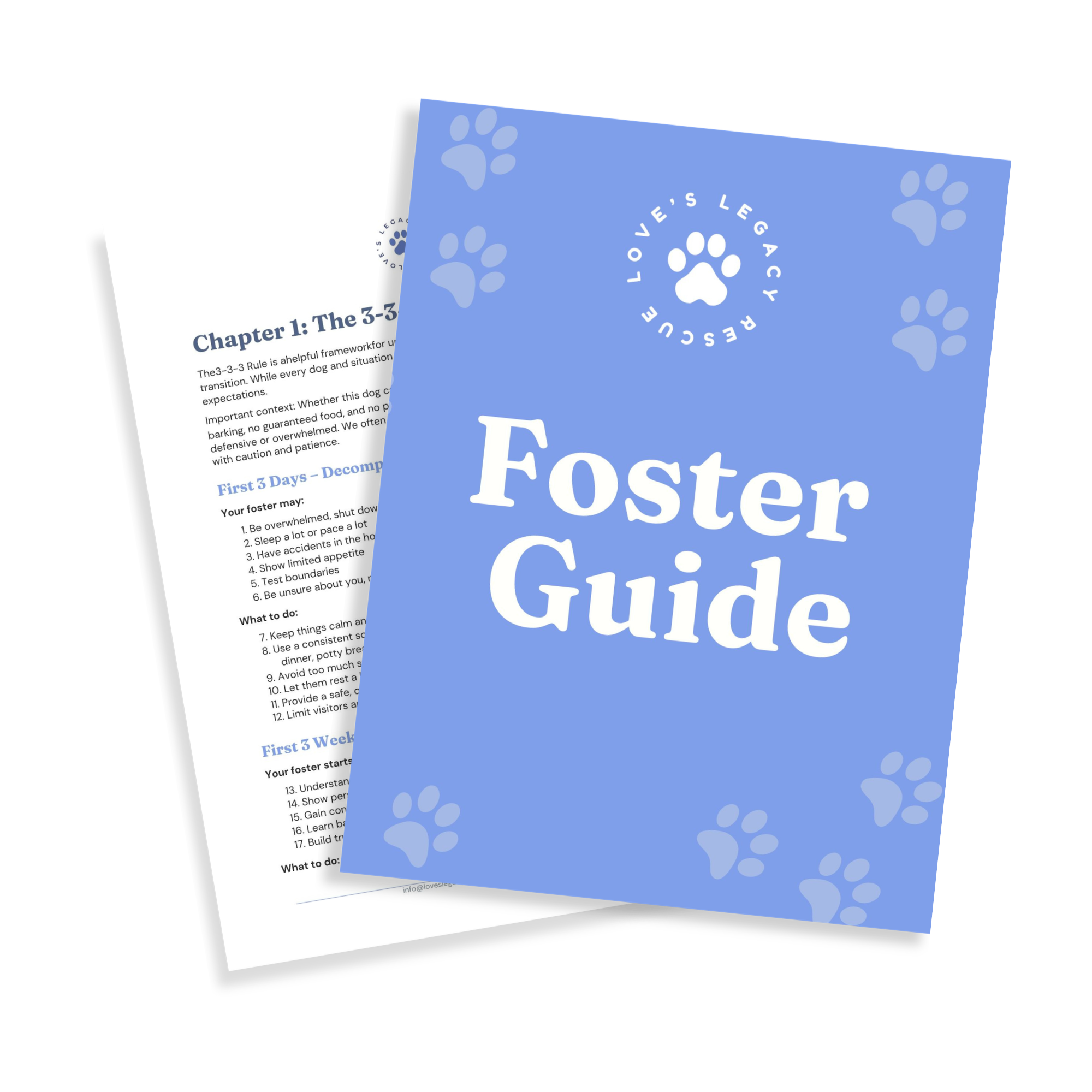
ResourcesFoster Guide
Our comprehensive New Foster Guide covers everything from preparing your home to training tips and what to expect.
Ready To Foster?
You're not just fostering a dog — you're saving lives and creating brighter futures. Join the Love's Legacy Rescue foster family today.
Have questions? Reach out to us at info@loveslegacyrescue.com